As a common material used in bearing applications, bearing steel typically falls into two major categories: carburizing bearing steel (G20Cr2Ni4A) and high-carbon chromium bearing steel (GCr15/GCr15SiMn/GCr18Mo). Based on detailed analysis, we present a comparison of the performance characteristics of these two types of bearing steel materials, with the hope that this information will assist you in making informed decisions and selecting the most suitable bearing steel for your specific needs.
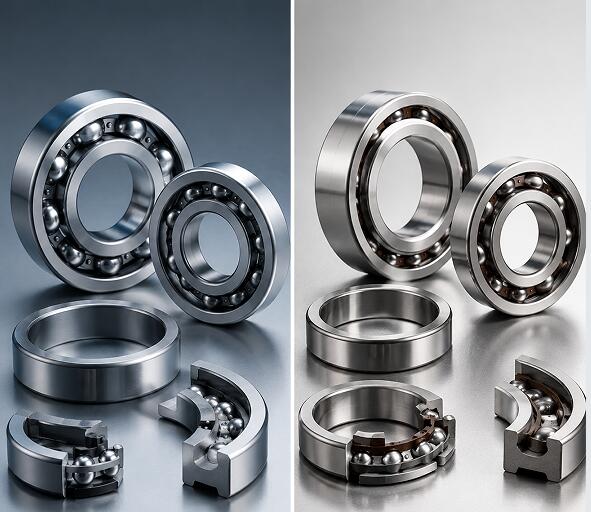
(Carburizing Bearing Steel (G20Cr2Ni4A) vs Bearing Steel (GCr15 / GCr15SiMn / GCr18Mo))
Carburizing Bearing Steel (G20Cr2Ni4A)
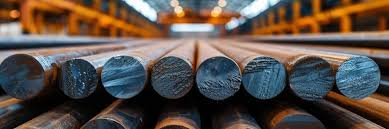
G20Cr2Ni4A bearing steel is a high-quality alloy carburizing steel (characterized by a low carbon content of 0.17–0.23%) specifically designed for the manufacture of bearing components. After undergoing heat treatment processes—such as carburizing, quenching, and tempering—bearing components made from this steel exhibit high surface hardness (hardness > HRC60), significant wear resistance, and superior contact fatigue strength. The low carbon content (0.17–0.23%) ensures that the core of the material retains excellent toughness (hardness > HRC33–48). This unique combination of a surface-hardened layer and a tough core makes carburizing bearing steel particularly well-suited for stable operation under conditions involving heavy impact loads. In summary, the advantages of carburizing steel bearings include:
1. After carburizing and quenching, the surface retains a state of compressive stress, resulting in excellent fatigue strength.
2. It possesses a strong capacity to withstand impact loads; even if micro-cracks form within the surface-hardened layer, they are unlikely to propagate inward into the core. The material features high surface hardness coupled with a lower core hardness (typically 35 HRC to 40 HRC), offering superior core impact toughness compared to high-carbon chromium bearing steels.
3. The depth and carbon concentration of the carburized layer can be precisely adjusted to meet specific requirements.
4. Its application is not restricted by the size or wall thickness of the bearing components. High-Carbon Chromium
Bearing Steel (GCr15 / GCr15SiMn / GCr18Mo)
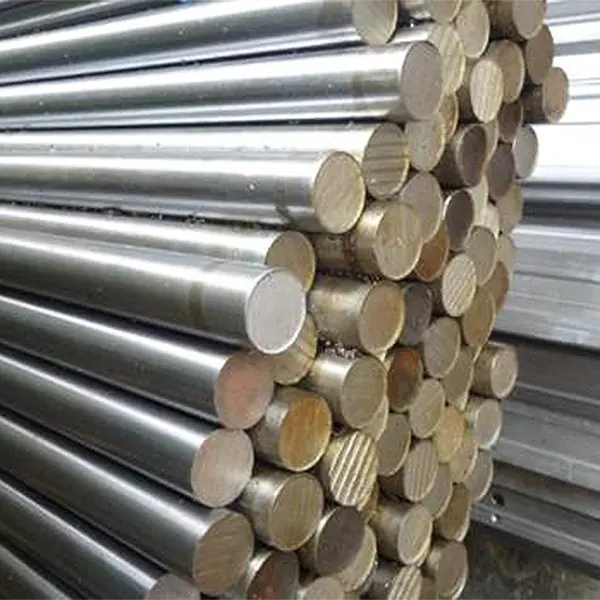
High-carbon chromium bearing steel is a high-carbon alloy steel containing 1.30% to 1.65% chromium. Its characteristics include: a relatively uniform and stable microstructure after heat treatment; high and uniform hardness; excellent wear resistance; high contact fatigue strength; and good dimensional stability and corrosion resistance. After spheroidizing annealing, it exhibits excellent machinability. This type of steel is capable of meeting the performance requirements for bearings operating under general working conditions.
1. High-carbon chromium bearing steel is widely adopted throughout the world. The most commonly used grades are GCr15 and GCr15SiMn; in my country, these two grades account for over 80% of the total volume of bearing steel consumed. While the properties of these two steels are fundamentally similar, GCr15SiMn steel possesses superior hardenability compared to GCr15 steel. Consequently, GCr15SiMn steel is the preferred choice for larger-sized bearing components.
2. GCr15 bearing steel is extensively used in the manufacture of engine bearings for automobiles, tractors, tanks, and aircraft; spindle bearings for machine tools and electric motors; as well as bearings for railway vehicles, mining machinery, and general-purpose machinery.
3. GCr15SiMn bearing steel is primarily utilized in the production of thick-walled bearings—such as various large and extra-large bearings—and is frequently employed in heavy-duty machine tools and rolling mills operating under conditions where significant impact loads are absent.
4. Due to its relatively high susceptibility to cracking and poor impact toughness, GCr15SiMn steel cannot fully satisfy the performance requirements for thick-walled bearings subjected to impact loads. The Ministry of Railways was the first to mandate that GCr15SiMn steel is prohibited for use in passenger train bearings. Furthermore, its application is restricted in large, thick-walled bearings for rolling mills and mining machinery when operating under conditions involving heavy impact loads. To address these limitations, GCr18Mo—a high-hardenability steel with superior wear resistance—has been developed. Offering performance characteristics superior to those of GCr15SiMn steel, GCr18Mo serves as an effective substitute for GCr15SiMn in railway bearings, rolling mill bearings, and mining machinery bearings.